Genetics
Man or Ape: Which are You? Which do You Choose?
Mar 01, 2007 at 12:00 AM
O Timothy, keep that which is committed to thy trust, avoiding profane and vain babblings, and oppositions of science falsely so called: Which some professing have erred from the faith. Grace be with thee. Amen.” I Timothy 6: 20-21 (KJV)
As we approach this topic, I want to remind us of Paul’s admonition to the young Christian, Timothy, to make strong efforts to keep his faith. Dr. Henry Morris in his commentary on these verses in his annotated The Defenders Study Bible points out that “Science falsely so called” is in the Greek, literally “pseudo-science” or “pseudo-knowledge."
Puzzles of the Genome
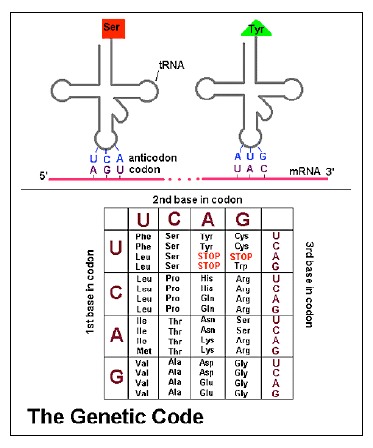
The genome of an animal contains the DNA that specifies the characteristics of the animal. This is in the form of a sequence of four bases; the sequence of the human genome is over three billion bases long. Of course, different individuals have different sequences. A few years ago the human genome project completed a description of the sequence of the human genome, and several other animals’ genomes have been sequenced since then. Scientists sometimes claim that these genomes provide evidence for the theory of evolution. However, recent results show how little we really know about the genome, and therefore it is unreasonable to assert that the genome provides evidence for evolution, when we understand it so poorly.
Figure 1
Does the Molecular Evidence Prove Common Ancestry is a "Fact?"
Genesis 1 describes the separate creation of various organisms “after their kind.” This means that all life on earth is primarily related through having a common creator and not through common descent. When evolutionists claim that molecules-to-man macroevolution is a “fact”, they are often referring to evidence for common ancestry irrespective of any evolutionary mechanism. This approach helps them avoid the inherent difficulties associated with explaining how point mutations, genetic recombinations, gene duplication, and natural selection could create new genetic information by chance.
Evolution - Impossible to Embarass its Believers
Written by Henry Morris, PhD
Introduction and Tribute: by Mark Stephens, MCS, former Chairman and current board member of TASC
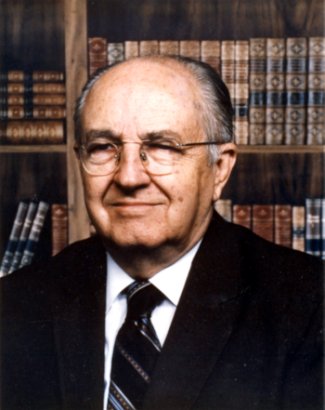
Henry M. Morris, Ph.D. Late Founder and President Emeritus of ICR
How Old Is Humanity?
There are a number of evidences that the human race is very young. For example, in an article in Science, 1 the age of the human race is is estimated to be 1,000 to 10,000 generations:
"...1000 to 10,000 generations old, which is roughly the age of the human population,..."
Intelligent Design
The phrase "intelligent design" is heard a great deal lately in the media, usually in the context of secondary school science education.
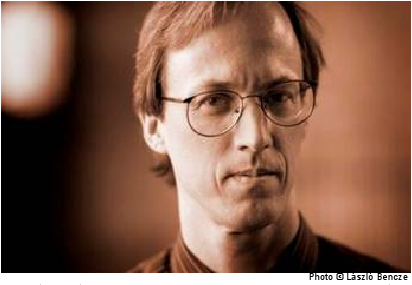
William Dembski
Faith and Science: Friends or Foes
My wife, Cassie, and I went on a three week trip to the northwest this past July and August. 1
On the Origin of Humans
One of the key issues in the creation-evolution debate is the origin of humans, Homo sapiens.
Creation Ministries Creation 2015 International Superconference
Dr. Dan Reynolds attended the recent Creation Superconference held in Myrtle Beach, South Carolina July 13-17. Dr. Reynolds has provided us a summary of each of the sessions at the conference.