Review of Heretic: One Scientist’s Journey from Darwin to Design
Review of Heretic: One Scientist’s Journey from Darwin to Design
by Matti Leisola and Jonathan Witt
Heretic 1
Heretic 1
May’s newsletter is dedicated to recent findings in science related to creation. It reflects the author’s interests and is by no means comprehensive or exhaustive.
These three men are some of the finest creation scientists alive today! Plan now to take advantage of these rare opportunities.
Darwin's Doubt: the Explosive Origin of Animal Life and the Case for Intelligent Design is Stephen Meyer's sequel to his previous book Signature in the Cell. 1
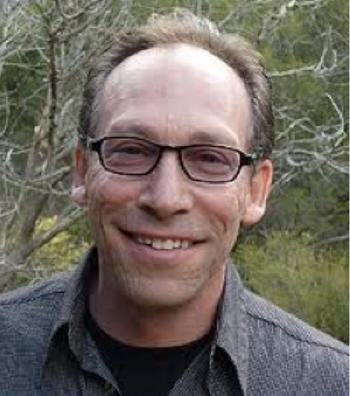
Lawrence M. Krauss, Ph.D., is Foundation Professor in the School of Earth and Space Exploration and the Physics Department, Co-Director of the Cosmology Initiative, and Inaugural Director of the Origins Initiative at Arizona State University.
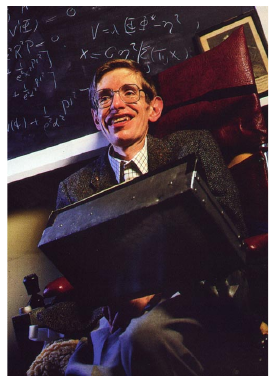
Stephen Hawking
Stephen Hawking is Professor of mathematics at Cambridge University where he held the Lucasian Chair at Cambridge for 30 years. He is author of the best-selling book A Brief History of Time. Hawking suffers from ALS. His most recent book, The Grand Design, was published in 2010 by Bantam Books.
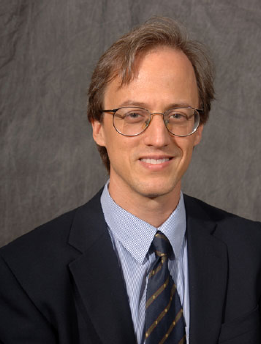
William Dembski
The End of Christianity by William Dembski attempts to reconcile natural evil with a good God. The problem for Dembski, who believes modern science has proven that the earth and universe are billions of years old, is to explain how natural evil in the form of physical death and suffering could have existed before the Fall of Man while leaving God’s good character intact. Dembski creates an elaborate theology to address this problem.
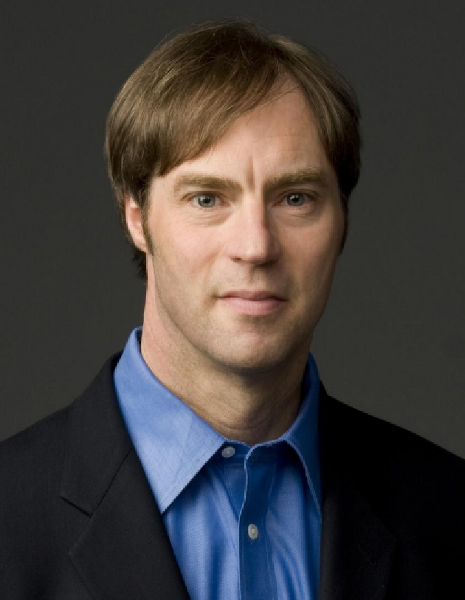
Stephen C. Meyer
Signature in the Cell: DNA and the Evidence for Intelligent Design 1 by Stephen C. Meyer is the latest book from a major proponent for intelligent design (ID). 2 Signature is Meyer’s magnum opus. Meyer is the director of the Discovery Institute’s (www.discovery.org) Center for Science and Culture, the flagship organization for the ID movement. He is a trained geologist and has a Ph.D. in the Philosophy of Science from Cambridge. 3 Signature is written at a level accessible to the layman but also informative to the specialist in biochemistry. The book is a history of Meyer’s interest and involvement with ID. The main focus of the book is the origin of the informational code in DNA, especially as it relates to the origin of life. The book discusses several topics including the history of the discovery of the structure of DNA, the cracking of the DNA code, the history and status of origin of life theories (especially the RNA world), basic information theory, various scientific methodologies and modes of thought and why ID is scientific, historical sciences, detecting design, why ID is the best explanation for the origin of the information in DNA, and responses to ID critics. This review will touch upon some of the book’s highlights.
The central question evolutionary science has yet to answer is by what natural processes is novel information introduced into the biological world. Until this question is answered, evolution will remain an organized system of unproven speculations and “just so” stories. There are two main events in the evolutionary tale that need this type of explanation: the origin of life and the mechanism for macroevolution.

The Devil’s Tower Neanderthal child (model reconstruction) http://www.ifi.uzh.ch/~zolli/CAP/Gib2.htm
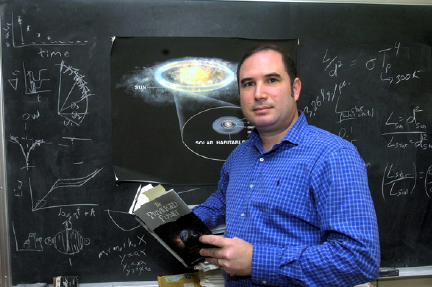
Dr. Guillermo Gonzales: a highly accomplished astronomy professor who has been denied tenure for his views on intelligent design.