Is the Appendix a Vestigial Organ?
Introduction
Although the appendix is a relatively small and unimportant organ in human anatomy, most people are aware of its presence. Many of us know someone who has been taken to a hospital for an emergent appendectomy because of an infected appendix (appendicitis). Winston Churchill and Harry Houdini were both struck with appendicitis, with Houdini succumbing to the illness. In the United States about 300,000 appendectomies are completed each year. 1
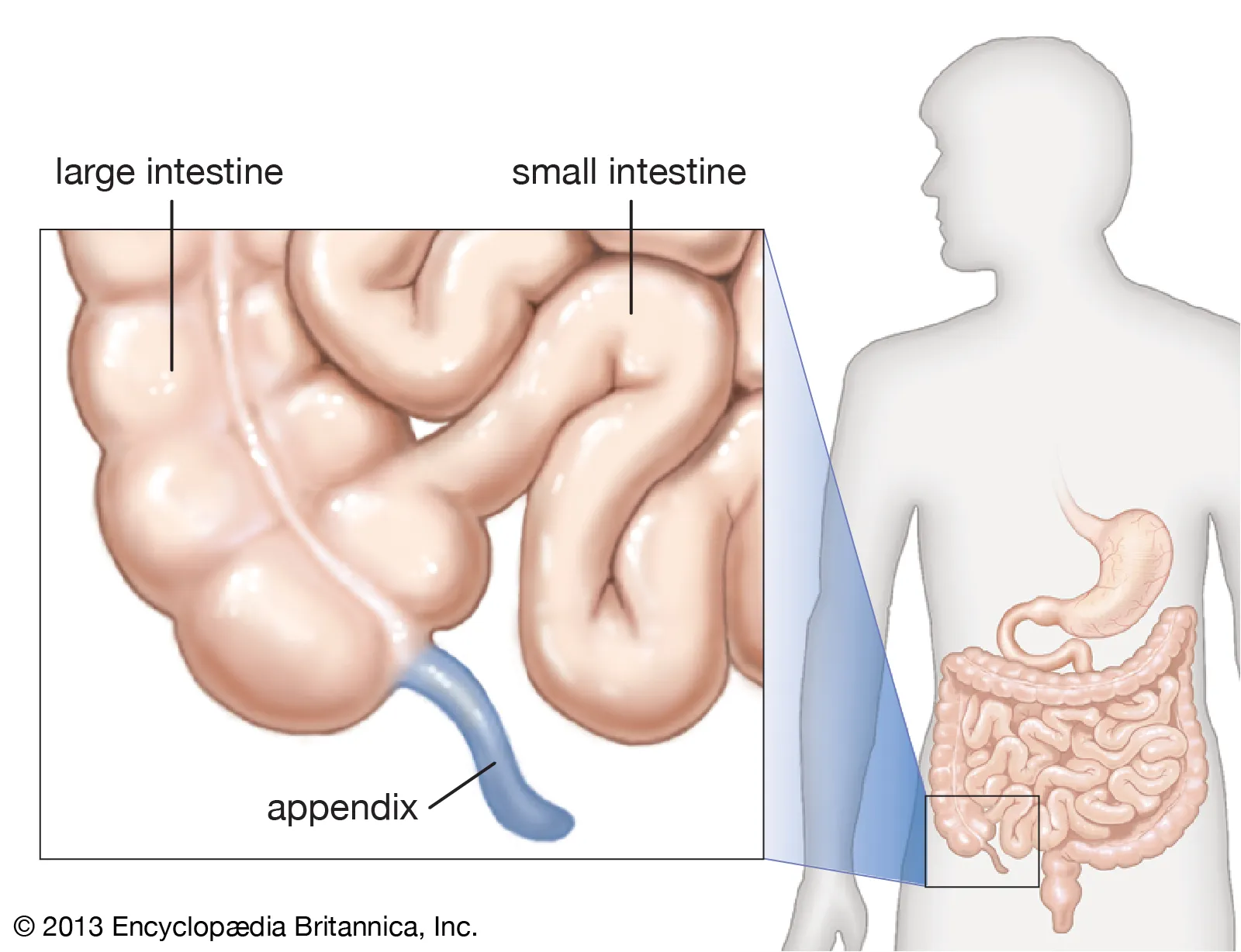
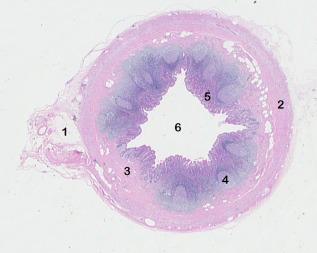
The appendix is a pencil-shaped organ that extends from the tip of the cecum. It communicates only with the cecum through a small opening. It has its own blood supply, lymphatic drainage, and smooth musculature. It is rich in white cells that support an immunologic function. The appendix is approximately 9 cm in length, but there is considerable variation from person to person. The appendix can be compared to a small tube which is closed on one side and open on the other to the large intestine. Below is a picture of the appendix and its relationship to the large and small intestine.
Image
Image
Image
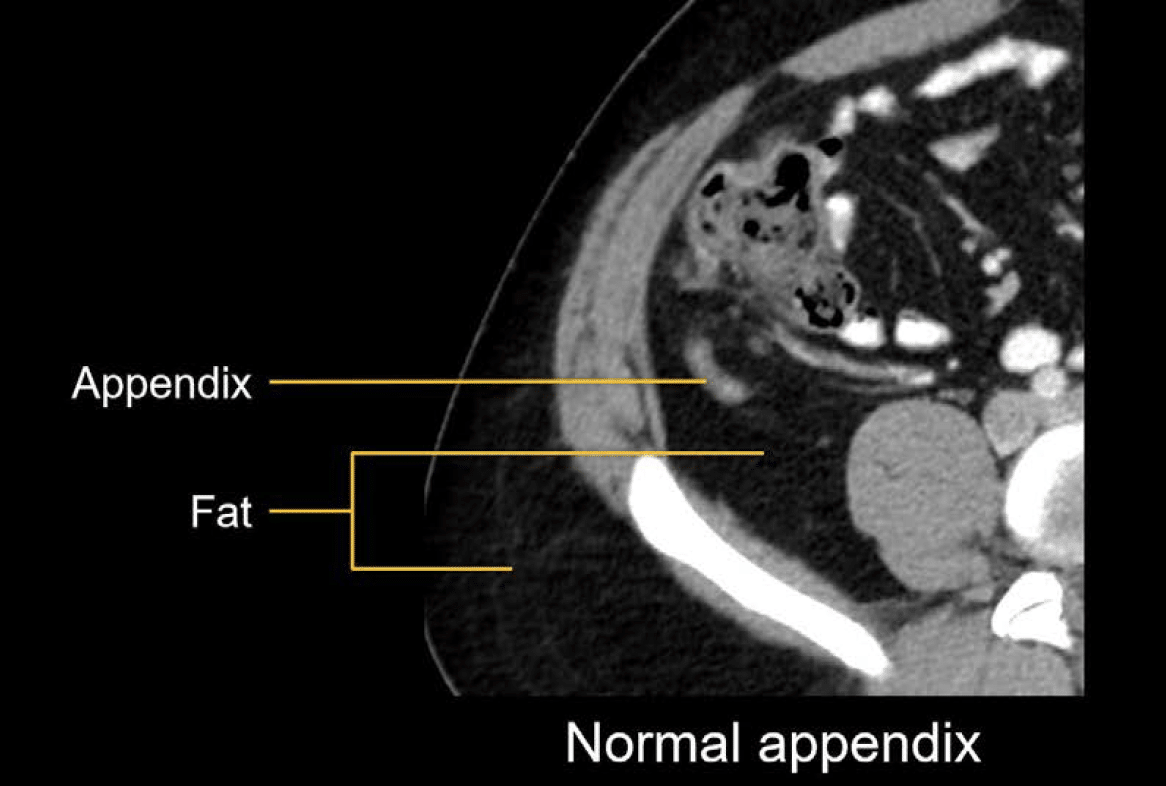
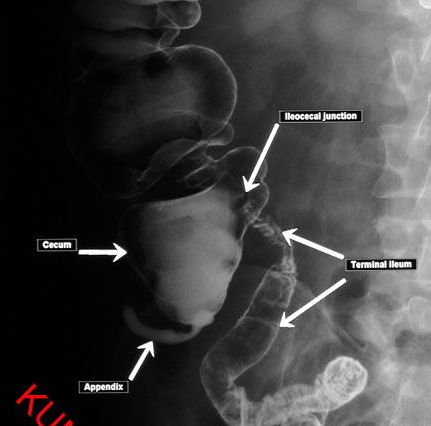
The barium enema study on the left side shows the normal course of the terminal ileum and cecum. The appendix is the small line of contrast extending below the cecum. The CT scan on the right side is a cross section of the abdomen at the level of the lower abdomen. The gray colored appendix is marked and is outlined by the surrounding fatty tissue of the abdomen (which is black in color.)
Image
Patients that have their appendix removed surgically do not need any supplementation or treatment to compensate for the loss of the appendix. They heal and appear to go on to lead a normal life. This raises the questions of what exactly does the appendix do and why do we have one?
Historical background
Charles Darwin first proposed the idea that organs can lose function over time, and their presence either diminishes or disappears (The Descent of Man, 1871). For example, in the evolutionary scenario, if an organism needs legs, legs gradually appear. Conversely, if an organism does not need legs, legs gradually disappear. German anatomist Robert Wiedersheim in 1893 listed 86 separate vestigial or useless organs in humans. His list included organs such as the adrenal glands, the pituitary glands, the thymus, and the appendix. 2
Certain animals such as dogs, cats, horses, monkeys, reptiles, and birds do not have an appendix. Other animals such as primates, rabbits, rats, beavers, porcupines, and manatees do have an appendix. One cannot follow an accepted “evolutionary tree” and establish the point at which the appendix enters (or exits) the proposed sequence. One evolutionary writer suggested that the appendix evolved independently at least six times! 3
Appendiceal Functions
The appendix is a blind pouch which branches off the large intestine (cecum) and thereby represents a “safe house” for beneficial bacteria. Following episodes of infectious diarrhea, the colon can be swept clear of normal colonic flora by infectious agents (Salmonella, Shigella, E. coli etc.) The appendix is not emptied by diarrhea. The normal bacterial population which resides in the appendix can then “reboot” the remaining colon back to a more normal flora. Such rebooting is thought to limit the severity of the infectious colitis and restore health. There are several studies in the medical literature which support this point of view. 4
5
6
7
Patients that have had their appendix removed appear to have increased risks for other medical illnesses. A study published in the International Journal of Colorectal Disease in 2021 followed over 900,000 patients that had surgical appendectomy over a span of eight years. The study noted a statistically higher incidence of both Crohn’s disease and ulcerative colitis in those patients that had their appendix removed previously. 8
A study published in the Journal of Clinical Medicine in February 2024 followed patients who developed fatty liver disease. The authors noted a statistically significant increase in the incidence of fatty liver in patients that had a prior appendectomy. The cause for this was not apparent to the researchers, but the presence of an appendix appeared to have a protective effect and lessened the incidence of fatty liver. 9
Evolutionary researcher Maxine Collard published a study on the presence of mammals with and without an appendix and the effect on lifespan. 3
Conclusion
Charles Darwin and evolutionist Robert Weidersheim obviously did not have access to the vast knowledge base of biology that we enjoy today. The list of “vestigial or useless” organs has shrunken steadily over time as scientific knowledge increases. Organs such as adrenal glands and pituitary glands may have seemed to be without function to the early evolutionary proponents, but both organs are now known to be critical for the maintenance of life. The lowly appendix may have been easily placed in the same vestigial category, but current knowledge shows that the appendix does indeed have beneficial function. There is good scientific evidence that the appendix protects the species from severe infectious diarrhea which reduces the risk of dehydration and debility. The appendix also appears to offer a statistically significant protection from various other diseases such as Crohn’s disease, ulcerative colitis, and fatty liver. The etiology of these protections is not yet understood, but these questions may be answered as our scientific knowledge increases. Finally, information from an evolutionary publication notes that animal species that have an appendix live longer than those without. One can conclude that the appendix has both beneficial and important function in the human.
The human body is an extraordinarily complex and integrated system. Our advances in science and anatomy have gradually uncovered the structure and function of our own “complicated machinery.” Advances in knowledge have uncovered the function of the appendix as well. The proposition that the system constructed itself randomly without a designer or builder is counterintuitive. The intelligent agent that designed and built the human body (God) would certainly know the function of each component, including the lowly appendix.
There is no situation where a complicated machine assembles itself randomly. Even a simple machine has both a designer and a builder. The human body has both a designer and builder, namely the Lord God Himself. King David writes of this in Psalm 139:14 10
“I praise you because I am fearfully and wonderfully made: your works are wonderful, I know that full well”
And in Psalm 104:24
“How many are your works, Lord! In wisdom you made them all: the earth if full of your creatures.”
The Lord God made the appendix as well, and it has a good purpose. In the words of King Solomon:
Proverbs 16:14. “The Lord has made everything for its own purpose.”
References
- 1Cleveland Clinic (2024-Jun-11) Appendectomy. https://my.clevelandclinic.org/health/procedures/21922-appendectomy
- 2Wiedersheim R (1895) The Structure of Man. Macmillan and Co., London, 202-–203.
- 3 a b Collard MK, Bardin J, Laurin M, Ogier-Denis E (2021) The cecal appendix is correlated with greater maximal longevity in mammals. J Anatomy 239(5): 1157–1169. https://doi.org/10.1111/joa.13501
- 4Bollinger R, Barbas AS, Bush EL, Lin SS, Parker W (2007) Biofilms in the large bowel suggest an apparent function of the human vermiform appendix. J Theoretical Biology 249(4): 826–831. https://doi.org/10.1016/j.jtbi.2007.08.032
- 5Laurin M, Everett ML, Parker W (2011) The cecal appendix: One more immune component with a function disturbed by post-industrial culture. Anat Rec 294(4):567–579. https://doi.org/10.1002/ar.21357
- 6Kooij IA, Sahami S, Meijer SL, Buskens CJ, te Velde AA (2016) The immunology of the vermiform appendix: a review of the literature. Clin Exp Immunol 186(1): 1–9. doi:10.1111/cei.12821
- 7Im GY, Modayil RJ, Lin CT, Geier SJ, Katz DS, Feuerman M, Grendell JH (2011) The appendix may protect against Clostridium difficile recurrence. Clin Gastroenterol Hepatol, 9(12): 1072–1077. doi:10.1016/j.cgh.2011.06.006
- 8Lee S, Jang EJ, Jo J, Park SJ, Ryu HG (2021) Long-term impacts of appendectomy associated with increased incidence of inflammatory bowel disease, infection, and colorectal cancer. Int J Colorectal Dis 36(8):1643–1652. doi:10.1007/s00384-021-03886-x
- 9Roderburg C, Waldschmidt D, Leyh C, Krieg S, Krieg A, Luedde T, Loosen SH, Kostev K (2024) Associating appendicitis with metabolic dysfunction-associated steatotic liver disease (MASLD): A novel insight into an unexpected connection. J Clin Med 13(5):1319. doi:10.3390/jcm13051319
- 10All Scriptures cited are taken from: Holy Bible, New International Version®, NIV® Copyright ©1973, 1978, 1984, 2011 by Biblica, Inc.®