First Annual Wonders of Creation Conference
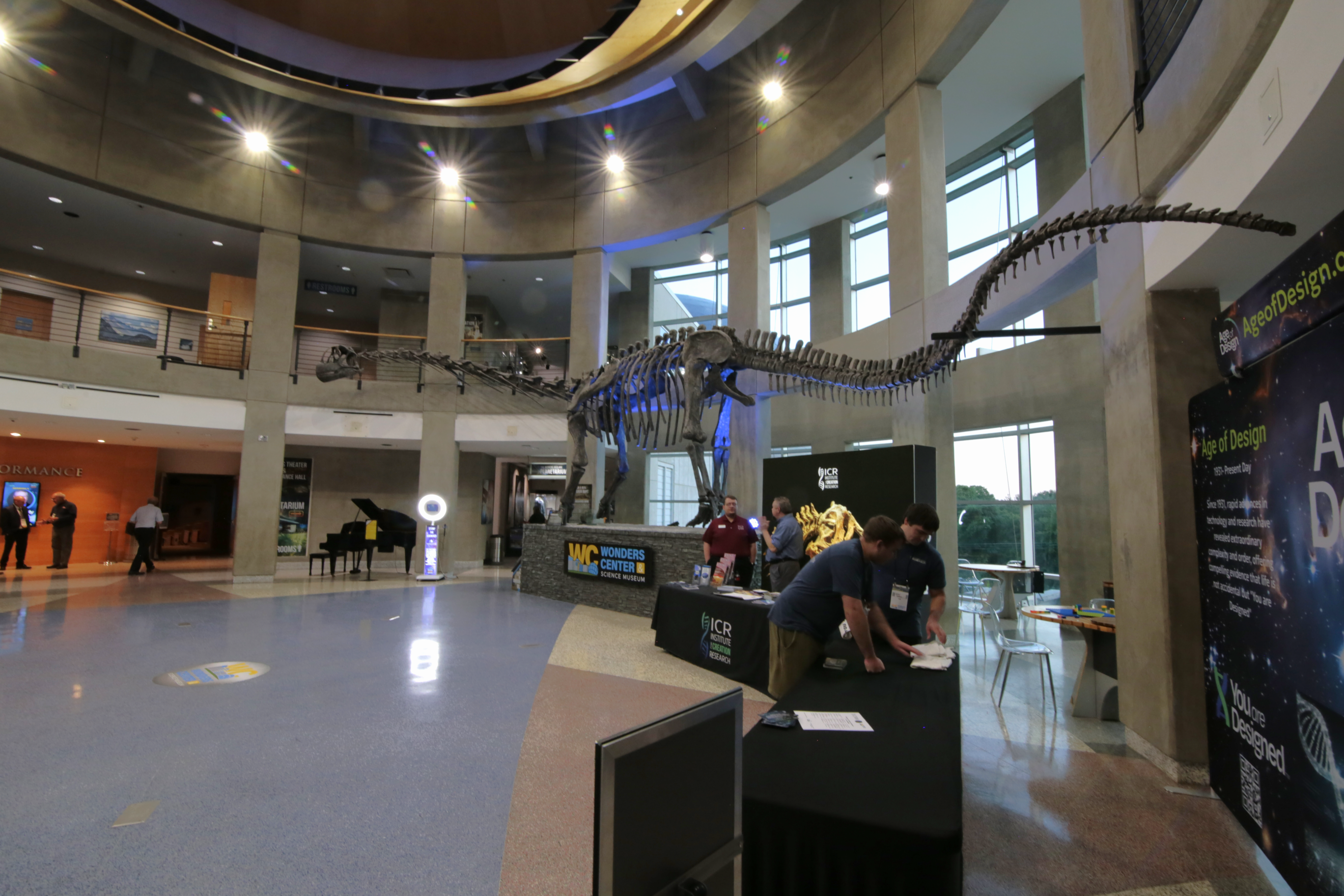
I recently had the privilege of attending the first annual Wonders of Creation Conference held June 10–12 at the Wonders Center and Science Museum (Figs. 1 and 2) in Dickson, Tennessee near Nashville. This article is about the museum and the conference.
Image

Wonders Center and Science Museum
The Wonders Center (www.wonderscenter.org) was founded by David Rives in 2023. It is the largest science museum in Tennessee and the largest creation science museum in the world. The museum houses a world class planetarium (https://wonderscenter.org/planetarium/, see the blue globe in Fig. 1) featuring state-of-the-art 8K projectors (more later). The planetarium houses a pair of one million-volt tesla coils that plays music! (Fig. 3). 1
Image
The museum also has a large bookstore containing hundreds of titles, videos, and educational toys (https://creationsuperstore.com/).
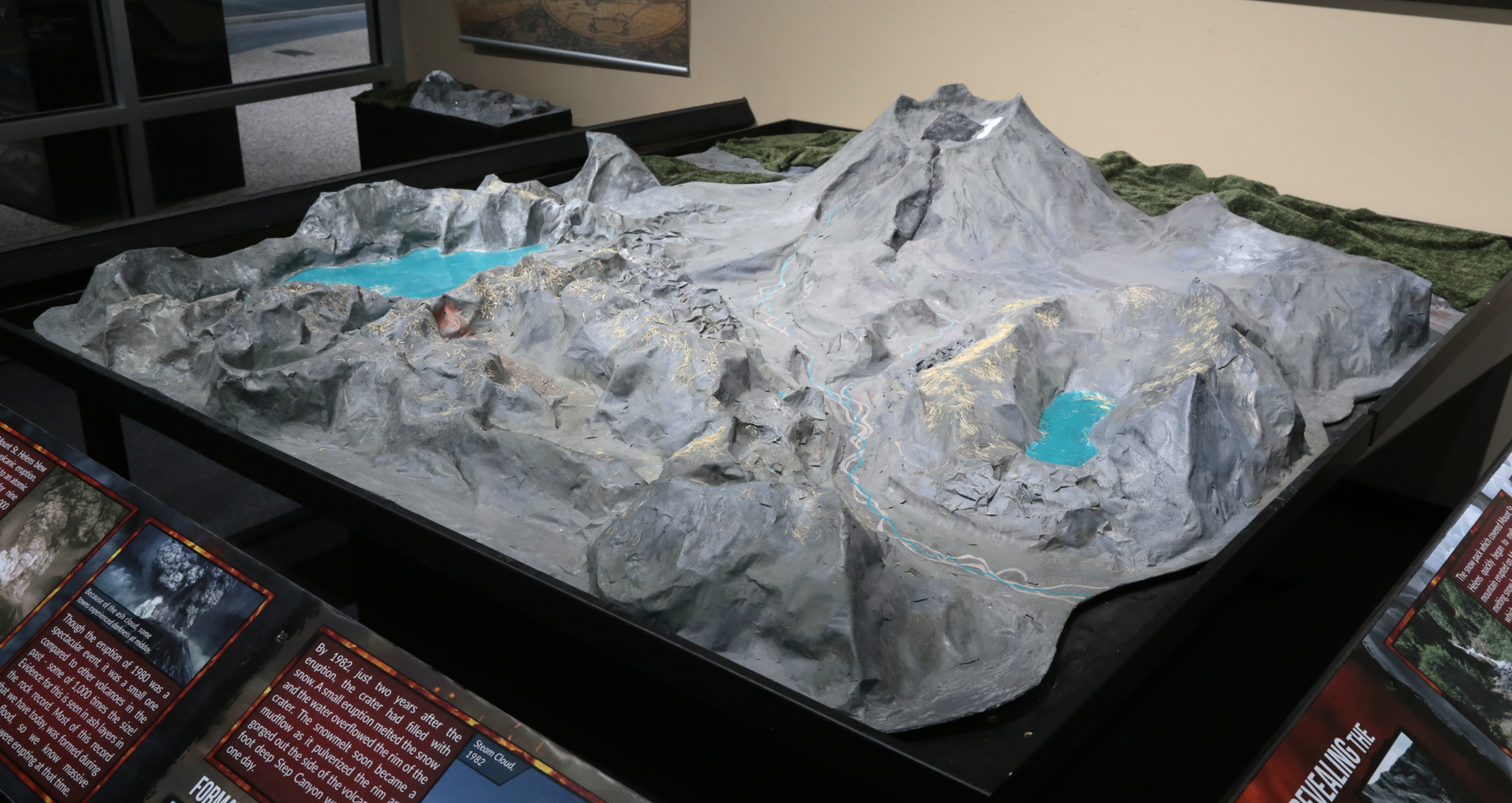
There are exhibit halls dedicated to geology (Fig. 4), astronomy, biology, paleontology, scripture, zoology, archeology, human anatomy, and others. There are many hands-on exhibits for kids.
Image

Image
There are meeting and conference rooms as well as a dinner theater. There is an onsite coffee shop with snacks. A person could see most of the museum in a day’s visit.
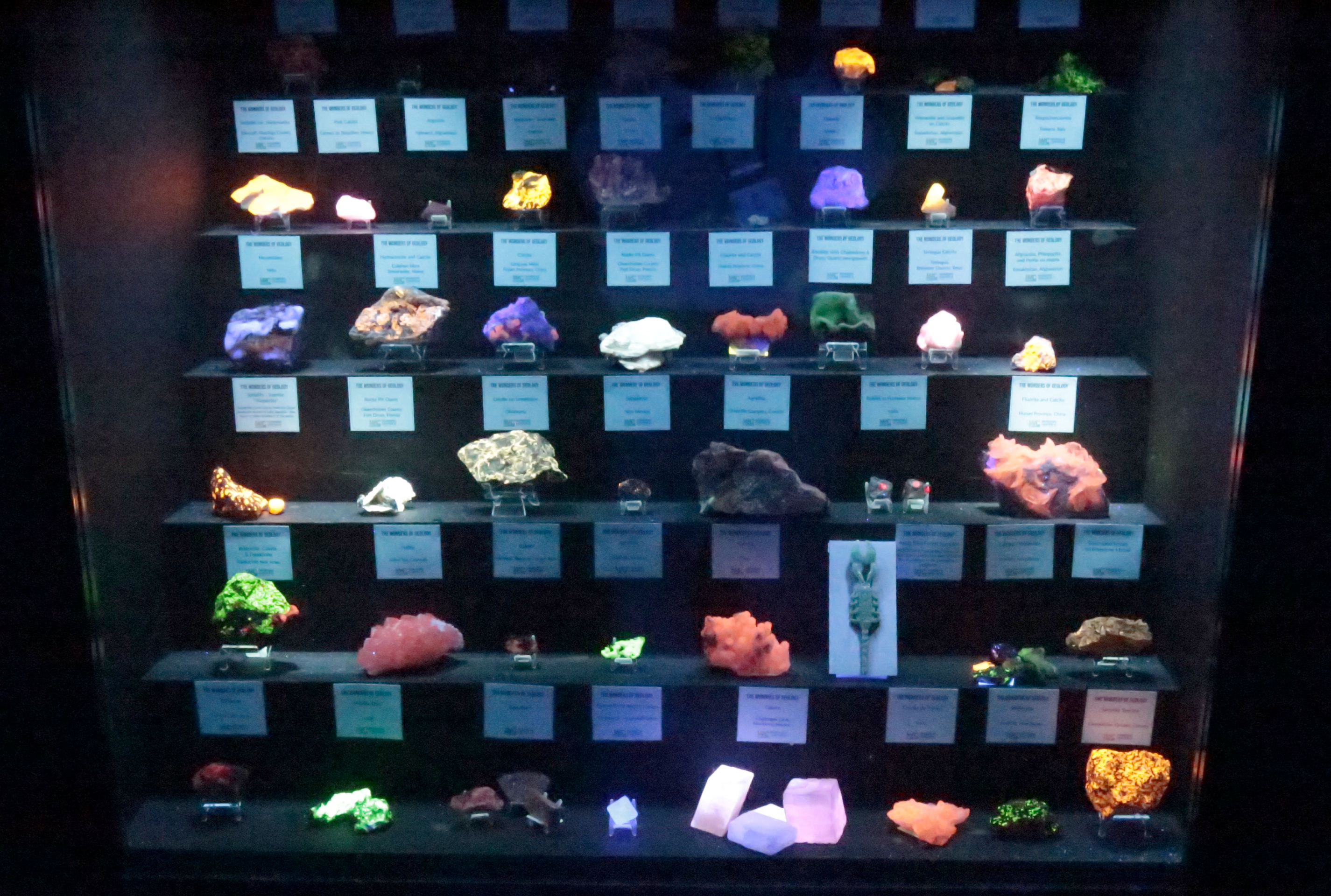
One of the exhibits that I especially enjoyed was the fluorescent rock collection. With the room lights on, all the rocks just looked like rocks. But with the room lights off and the UV lights on, many beautiful colors could be seen (Fig. 5).
Image
Rives also founded the Genesis Science Network (GSN, http://www.genesissciencenetwork.com/) as a biblical creation answer to the Discovery Network which always gives credit to Darwin and blind natural processes for what we see in nature. The GSN provides 24/7 creation video programming.
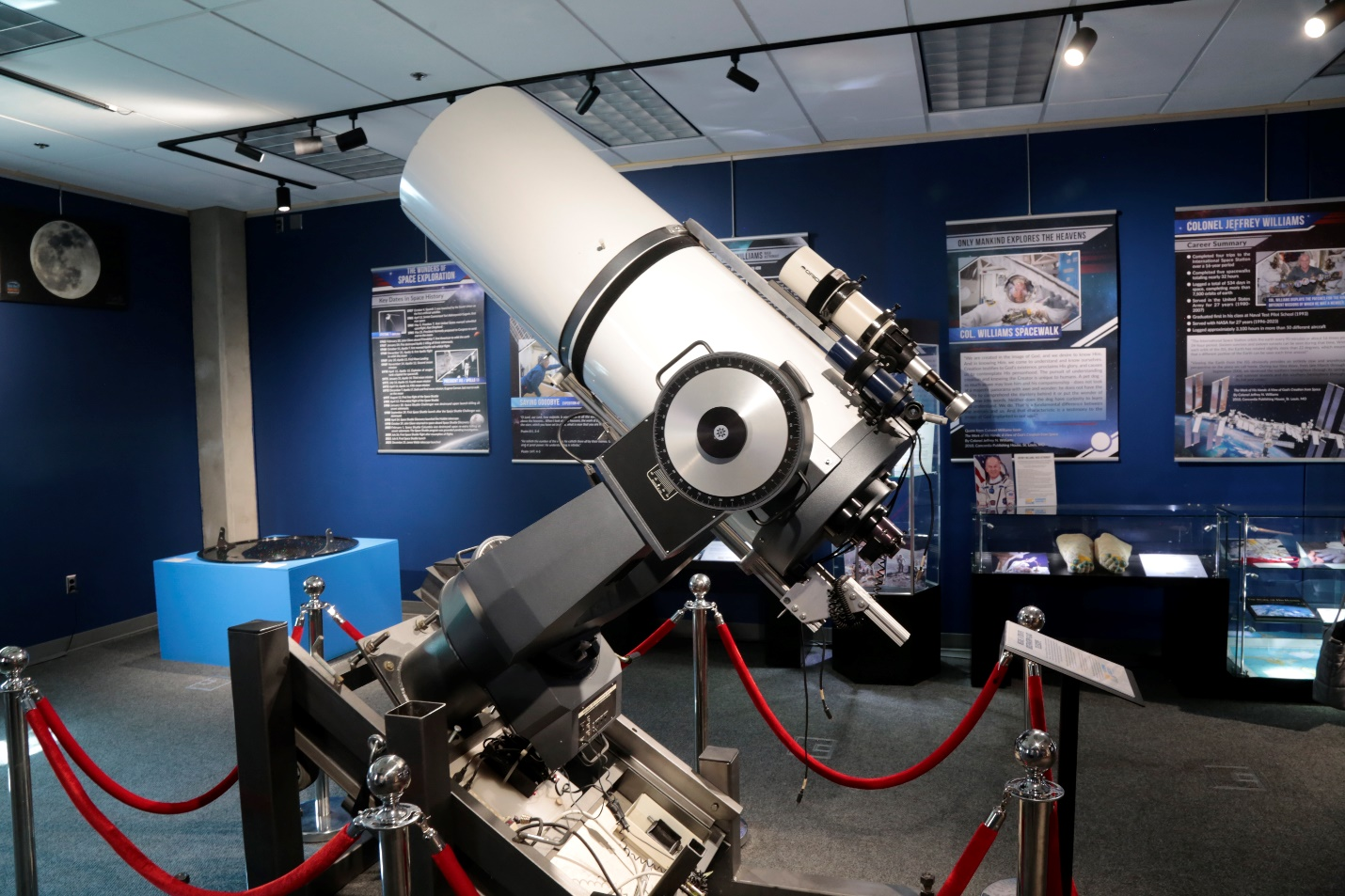
Rives is an accomplished astrophotographer. He has had a research grade Meade LX200 16” Schmidt Cassegrain telescope since he was sixteen! The telescope is on display at the museum (Fig. 6).
He showed us some of his photos, including pictures of the Orion Nebula and a total solar eclipse 2 where the backside of the moon could be seen due to earthshine.
Image
Conference Talks
The conference featured museum founder David Rives; ICR scientists, including geneticist Dr. Jeff Tompkins, ICR president Randy Guliuzza, MD, physicist Dr. Jake Hebert, and geologist Dr. Tim Clarey; biochemist Dr. Joe Deweese of Hardeman University; engineer Dr. Mark Horsetemeyer of Liberty University; Bodie Hodge of Biblical Authority Ministries; and anatomist Dr. Brad Harrub of Focus Press, Inc.
The following is a summary of the talks I attended. There were at least two talks I was not able to attend since some presentations ran concurrently.
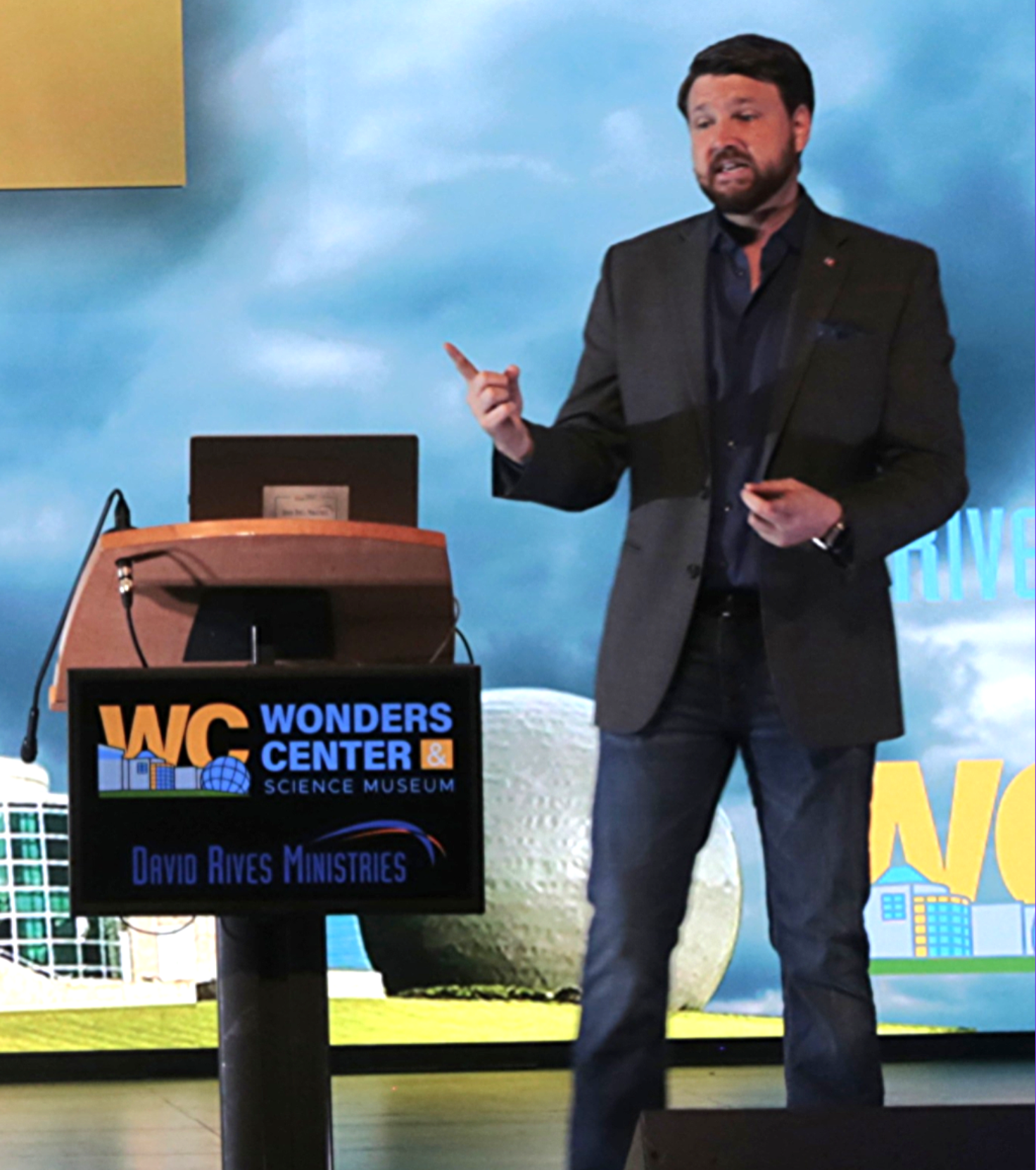
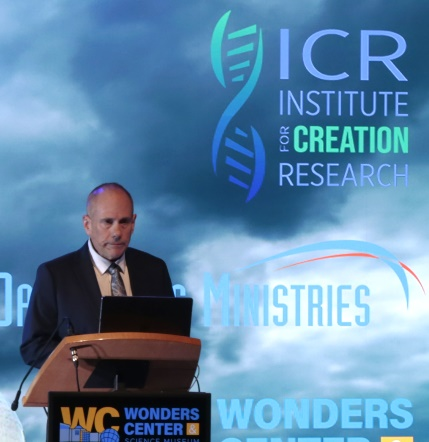
The first talk was entitled “Wonders without Numbers” by David Rives (Fig. 7).
He opened with a song! There are many things about creation we will never know, but God has given us wonders without number, some in the book of Job. Consider the hummingbird. The hummingbird is the smallest bird; it can move at 34 mph, makes 80 wing strokes/s, can detect sugar concentration in flowers, flaps its wings in a figure-8, and has an active heart-beat of 1200 beats/min but only 35 beats/min when at rest at night. The hummingbird’s body adjusts the heart rate automatically. It would die without this system. How could this system have evolved?
Our actions are determined by our worldview. Evolutionists (materialists) have a pantheon of gods: time, nature, chance, spontaneous generation, etc. Darwin observed microevolution of finches at the Galapagos Islands, but then mistakenly extrapolated microevolution (variation within kinds) to macroevolution (molecules to man). The Bible teaches all creatures were created after their kind (Gen. 1).
Image
Concerning macroevolution, Rives reminded us about Proverbs 30:6 which states: “Do not add to his words, lest he rebuke you and you be found a liar.” Darwinism gave rise to materialism that was embraced by Stalin. Stalin instituted labor camps in World War II, killing millions. If man is not created in God’s image, he has no intrinsic worth. Belief in evolution is the first step to atheism. Christian theism is based on the foundation of biblical creation (Gen. 1:1). God is outside of nature. Jesus embraced Genesis (John 5:46–47); creation is foundational to the Gospel. Most founders of modern science were creationists. Mathematical models apply to nature. Why should something we invent (math) correspond to how nature operates? Because our minds and nature come from the same source!
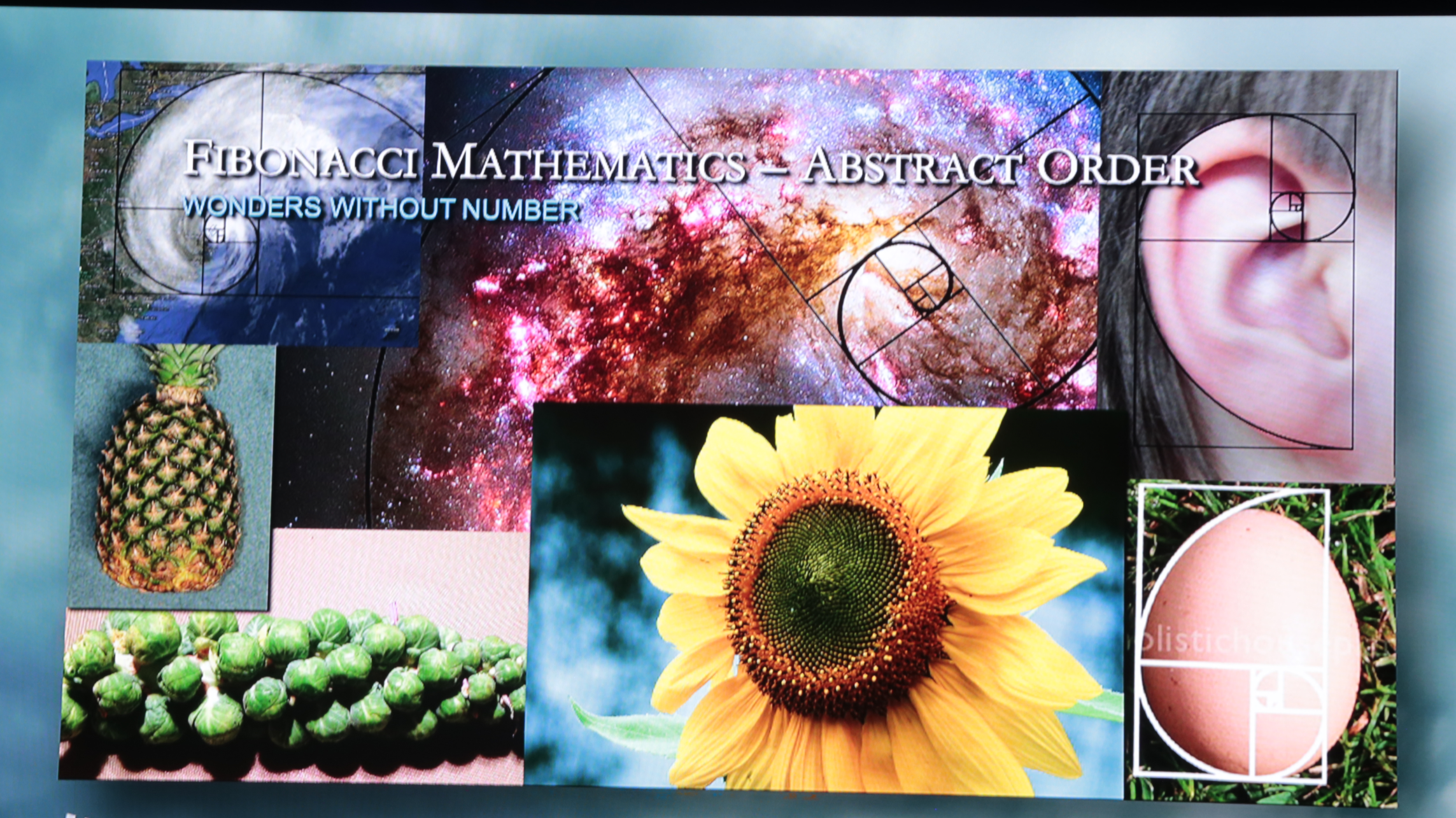
Rives discussed the Fibonacci Sequence, a mathematical geometric spiral that applies to many natural objects: pineapples, spiral galaxies (Fig. 8), hurricanes, sunflowers, chicken eggs, the human ear of a child, etc. God uses the same patterns throughout nature. Science helps us think God’s thoughts after Him.
The universe gives glory to God (Ps. 19:1, Ps. 33:6). The size of universe and variety of objects in it show God’s power, glory, and creativity. Everything points back to God (John 1: 1–13, Col. 1:16, John 3:1).
Tim Clarey (Fig. 9) was next with a talk entitled “A Global Flood?” In 2 Pet. 3:5–6, it is predicted that in the last days people will deny the flood; they will ignore the evidence. The Bible says there was a recent global flood. There are six megasequences in the sedimentary rock record. Megasequences are combinations of sedimentary rock layers usually found together, delimited by erosional surfaces. This has been accepted by secular geologists since the 1960s. Secular geologists believe there have been six separate large floods over millions of years that laid down the six megasequences.
Image
Clarey is advancing a progressive flood model where Noah’s flood was accomplished in six major sequential stages with little time between stages. 3 There is little erosion between megasequences (flat). The flood grew (sea level increased) for megasequences 1 to 5 (working from the bottom up), then abated during megasequence 6. Oil companies have geological data on over 3,300 drill cores (columns) that go down to granite (pre-Cambrian) and are distributed worldwide. The six megasequences can been seen in the cores. Maps of the various megasequences in the various cores show the megasequences are distributed worldwide—just what would be expected from a global flood.
Image
Earth is the only planet that has moving tectonic plates. Plate movement was accelerated during the flood (breaking up the fountain of the deep in Gen. 7:10–11). Catastrophic Plate Tectonics (CPT) can model the flood. 4 Seismic tomography indicates cold subducted slabs of oceanic crust deep inside the mantle; the subducted slabs should have warmed up by now if they are truly millions of years old.
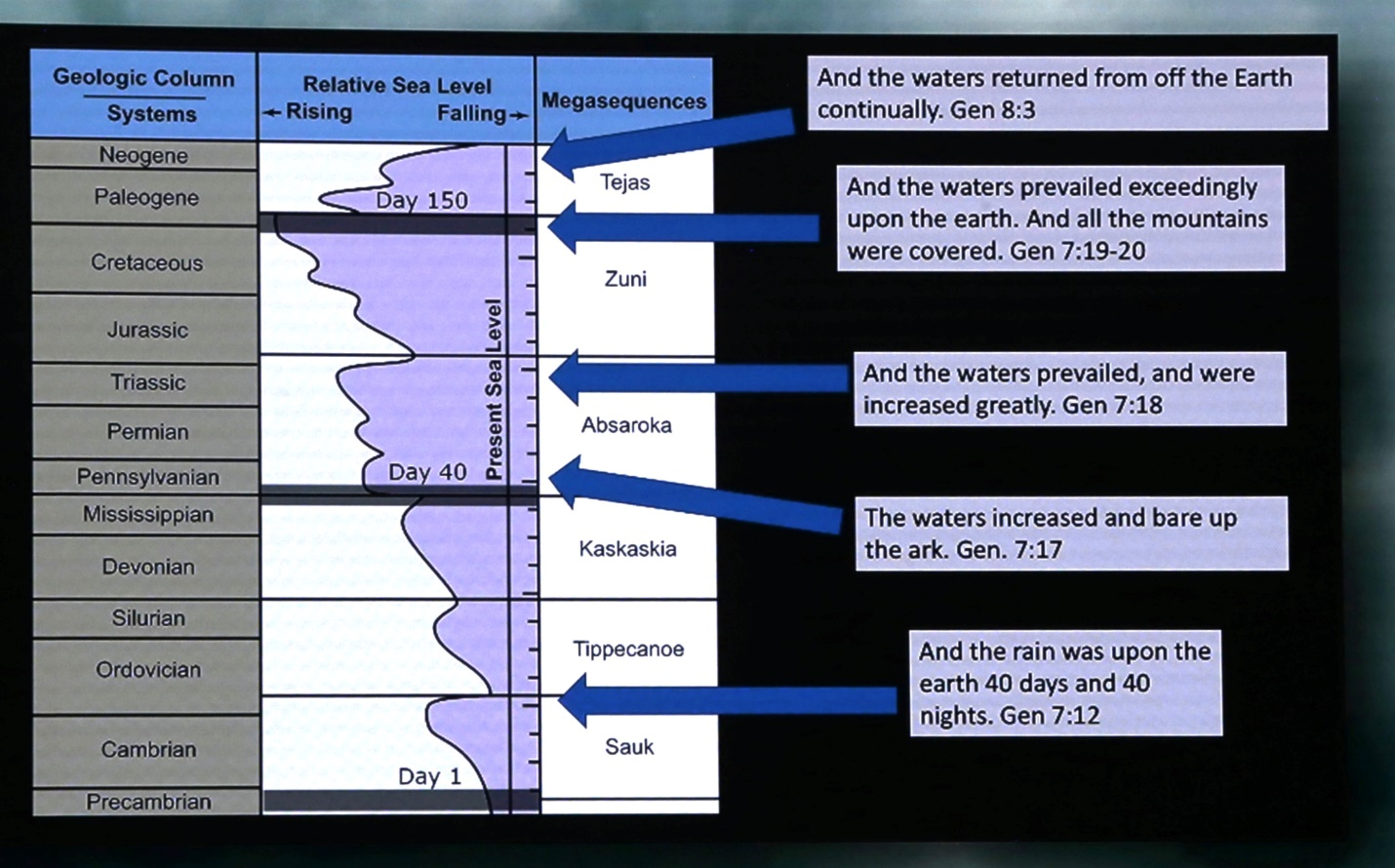
There were 40 days of rain and tsunamis (Fig. 10). Megasequences 1–3 were laid down during first 40 days of the flood. These megasequences filled in the lowlands and shallow seas. The Sauk megasequence is basal and extends across North America and other continents. Megasequences 4–5 were laid down between day 40 and day 150. During this time, the heated sea floor was uplifted, and the land masses were covered with water. By the Zuni (megasequence 5), land and marine animals were buried together and are found together in fossil graveyards. The Tejas (megasequence 6) was laid down during the recession stage between days 150 and 314 (Gen. 8:1–3). Mountains formed during the Tejas. There is 8,000 ft of sand in the Gulf of America from the Rockies and Appalachia that were deposited during the recession phase.
Image
On every continent, the megasequences and fossils are always found in the same order. Sea level was uniform as the flood progressed. The flood was recent based on the presence of dinosaur soft tissue. A recent, rapid, global progressive flood model in which there were six flood stages explains the data.
David Rives (Fig. 7) then gave a talk entitled “Eleven Verses Backed by Science.” David said we should trust the science (facts) but not necessarily the secular scientists. Operational science is trustworthy, but historical science is based on unproveable and often questionable assumptions. It is obvious we live in a created world (Rom. 1:20).
The universe had a beginning according to Gen 1:1. The Big Bang theory explains how the universe developed but not how it began. The first cause was God. The First Law of Thermodynamics says matter/energy can neither be created nor destroyed by natural processes. The universe could not have created itself. The Second Law of Thermodynamics says the amount of useful energy in the universe is irreversibly decreasing with time. Since the universe still has useful energy, it could not have always existed.
In Jer. 8:7 the instinct of migratory birds to move at the right times is mentioned. The Arctic tern is an amazing bird that migrates from pole to pole annually, sometimes up to 56,000 miles in one year. They may take different paths on their journeys being able to navigate through thousands of miles of terrain.
Psalm 139:13–16 describes the development of a child in the womb.
Lev. 17:14 says the life of animals is in their blood.
Lev. 11:33 anticipates harmful microbes.
Job 40:15–24 describes what would seem to be a sauropod dinosaur (behemoth).
Job 26:7 describes the Earth as suspended in empty space. 5
Ps. 8 comprehends the magnitude of the heavens and the place of humanity in the world. It also mentions the “paths of the sea,” which we know today as ocean streams and currents.
Gen. 15:5 suggests the number of stars in the universe is large. Astronomers today have estimated there are as many as 1021 stars, and possibly more.
Isa. 45:18 says God made the world to be inhabited. The Earth has many characteristics that make it ideal for life as we know it (right distance from the sun, right mass, right atmosphere, nearly circular orbit, single large moon, magnetic field, large outer planets, good place in the galaxy, solitary and stable star that emits the right wavelengths of light, surface covered in water, ozone layer, ocean currents, axial tilt, etc.).
These verses were written millennia before scientists had discovered these things.
The next talk was presented by biochemist Dr. Joe Deweese (Fig. 11) of Hardeman University. His talk focused on on-going research into sequencing DNA from fossils, especially dinosaurs. 6 Having DNA sequences from fossilized creatures could help us understand life before the flood. Fossils may still contain soft tissue and biomolecules. It is estimated that the half-life of DNA under ambient conditions is about 500 years (this is the amount of time it would take half of the nucleotide bonds to break). Some DNA might last possibly for a million years under the most favorable conditions.
Image

A new nanopore technology facilitates complete DNA sequencing in hours. The nanopore sequencing takes several steps and much pretreatment before measurements can be made. The technique is able to account for contamination from humans, microbes, plants, other animals, etc. We don’t have any reference samples for dinosaurs.
However, if the same nucleotide sequence were to be found in different fossil samples assumed to be from the same species, then the sequences would probably be correct for the animal. His lab has worked on 12 dinosaurs so far. The data are in the form of 200 nucleotide fragments and occupy several terabytes of data.
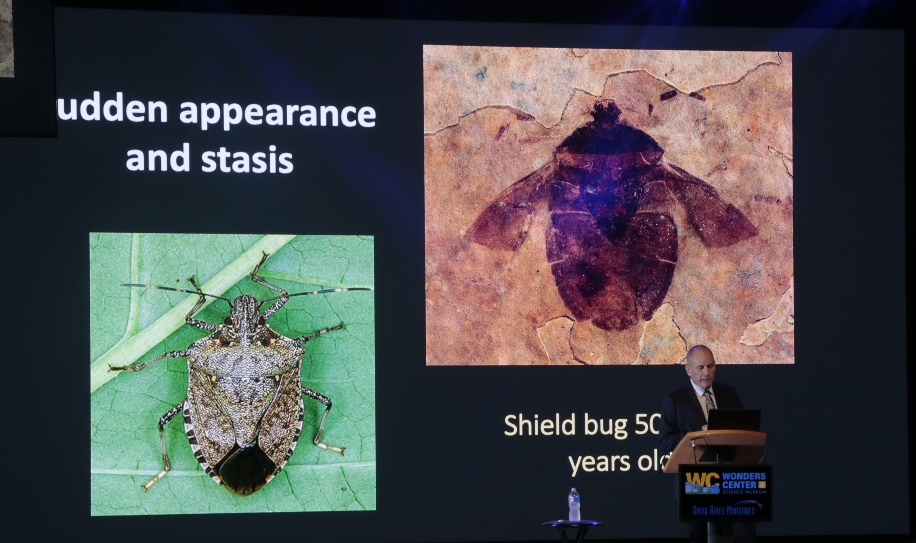
Geneticist Jeff Tompkins (Fig. 12) then presented a talk entitled “The Fossils Still Say No!” 7
The fossil record has 5 telling characteristics that you would expect to find if there had been a recent, rapid, and global flood:
- Sudden appearance of fossil organisms
- Stasis – organisms stay the same throughout the record
- Marine mixing – mixing of terrestrial and marine animals in many burial sites
- Burial by ecological zones – fossils found in order of habitat location
- Recent burial – intact dinosaur soft tissue and proteins; radiocarbon in fossils
Image
The fossil record does not look like Darwin’s tree of life but is more like an orchard. Stephen J Gould, a Harvard paleontologist, once said all we have of the “tree” are the tips of the branches; everything else is inferred.
There are many examples of living fossils: shield bugs (Fig. 13), coelacanth fish, lobsters, frogs, horseshoe crabs, brittle stars, some worms, and many others. Living fossils are fossils of organisms assumed to be millions of years old that look like their living counterparts. Living fossils show stasis.
Marine mixing is clearly seen at the Hell Creek formation in Montana. 8 There are brachiopods everywhere mixed with dinosaur fossils and fossils of many other terrestrial animals. Brachiopods are found in all 6 megasequences.
The stages of the global flood are found in the six major megasequences which reflect ecological zones. 9
Image
The sudden appearance and diversification of angiosperms in the Cretaceous period is what Darwin called an “abominable mystery.” The angiosperms appear without any apparent precursors. Perhaps the greatest sudden appearance of fossil organisms is the Cambrian Explosion, where two-thirds of all animal phyla appear at the base of the fossil record in a geological twinkling of an eye with no obvious precursors.
Mary Schweitzer discovered dinosaur soft tissue, proteins, and chromatin. Collagen should only last a thousand years. Bones cells are now detected in many samples. The existence of dinosaur soft tissue, recognizable cells, and intact protein and DNA segments all suggest a recent and rapid burial of the animals.
There are soft worm fossils that are allegedly 551 million years old. 10
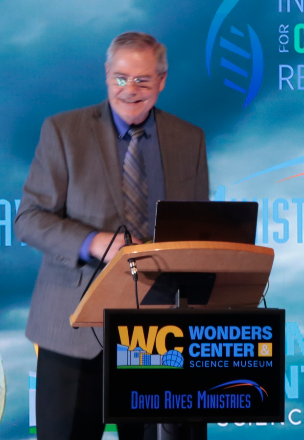
Dr. Randy Guliuzza (Fig. 14), president of ICR, then presented a talk entitled “Finally, A Revolutionary New Theory of Biological Design.” Randy said we need to reconsider how we think about the creation/evolution issue, especially in how organisms adapt. He said we should consider the ways organisms adapt more as the result of intentional planning and less as a reactive process. He wants to challenge the current creation science/intelligent design thinking in this area. He said we have a rare opportunity to influence how scientists think of adaptation in the future because of current crises within the evolutionary ranks. He said we need to approach organisms with an engineering mind set.
Image
Darwin claimed the random variation/natural selection mechanism was responsible for the diversity of life on Earth. Evolutionists say vestigial organs, junk DNA, poorly designed organs, etc. support this explanation. Organisms have supposedly been cobbled together through a struggle for survival over eons. This approach attacks God’s workmanship. We need to show that organisms are highly engineered and purposeful systems, that their designs were the result of an intentional plan, not haphazard. We need to show nature is a well-planned integrated whole.
The standard explanation for variation within organisms used by creationists and ID advocates is that random mutations can lead to adaptation but at the cost of information. But what if some adaptations are due to built-in programming that responds to environmental cues and not at the expense of genetic information? There is evidence that some mutations are not random. Some adaptations occur too fast to have been the result of blind chance mutations and natural selection. Natural selection is a poor God substitute.
Many evolutionists are now questioning the natural selection mechanism. Because of this, there is an opening for us to have an influence on how adaptation is thought about. We need to focus more on the organism and less on the environment when considering how adaptation works. In the evolutionary view, organisms are passively shaped by the environment and natural selection through a trial-and-error process. From an engineering perspective, organisms are actively responding to environmental cues through systems designed to react to specific stimuli. This approach assumes there are built-in sensors that communicate with built-in systems designed to facilitate rapid adaptation. We should assume organisms can be reverse engineered. Randy called the new approach Continuous Environmental Tracking (CET). 11
How we think about adaptation matters. The assumptions of evolution and deep time caused scientists to overlook the functions of non-coding DNA and the discovery of dinosaur soft tissue. Assuming design in biology will lead to discoveries otherwise overlooked due to incorrect presuppositions.
The next talk was entitled “Mysteries of the Ice Age” presented by physicist Dr. Jake Hebert. 12 There is evidence for an ice age (moraines, erratics, U-shaped valleys, etc.). Millions of years are not required to explain the evidence. Uniformitarian geologists assume that the present is the key to the past (i.e., today’s observable geological processes and their rates are the primary causes of all geological formations). They assume that snow must have accumulated at present rates over eons to explain massive ice sheets.
However, uniformitarian explanations don’t work. Uniformitarian thought was prophesized in 2 Peter 3:3-4.
The secular Astronomical Theory holds that slight changes in the amount of light received from the sun due to Earth’s orbital behavior over deep time can explain the onset and end of ice ages. The problem is that the variations of light predicted by this mechanism are far too small to account for the required temperature changes. So, secular scientists assume there are secondary positive feedback mechanisms that amplify the effects initiated by Earth’s orbital behavior. Based on these assumptions, Earth’s climate is viewed as unstable and easily sent spiraling into runaway behavior (for example, catastrophic global warming). Scientists have used isotope measurements in deep sea sediments and ice cores to bolster this view. Presumably, isotope measurements mirror the effects of Earth’s orbital behavior in the climate. However, more recent scholarship has thrown off the timing of the isotopic behavior with predicted orbital effects undercutting the astronomical theory. 13
Secular scientists say there have been as many as 50 ice ages. But each ice age would destroy the evidence for previous ice ages. Creation scientists believe there has been one ice age that occurred after the flood and lasted about 700 years.
For ice sheets to grow, cool summers and heavy snowfall are needed. Cool summers would prevent the melting of the snowfall from the previous winter so the ice sheet could grow. Heavy snowfall occurs when there are high humidity and low temperatures in the atmosphere. However, cold air is usually relatively dry air. The flood would have provided ideal conditions for an ice age. Much volcanism is assumed to have occurred during the flood (breaking up of the fountains of the deep, Gen. 7:11), both on land and in the oceans. Undersea volcanoes would have warmed the oceans accelerating evaporation. Volcanoes on land would have put much volcanic ash and chemicals into the atmosphere that would block and/or reflect sunlight from reaching the surface. As a result, the atmosphere at the end of the flood and for centuries to follow would have had a high humidity and low temperature resulting in heavy snowfall and ice sheet growth. Secular scientists can’t use this mechanism because they assume volcanoes occur sporadically over millions of years; the effects would never be strong enough for an ice age. Jake said the requirements for an ice age can been summarized in the acronym HEAT (H = Hot oceans, E = Evaporation, A = Aerosols, T = Time [short]). Volcanism slowly declined after the flood as runaway subduction decreased and plate movements slowed.
There is little evidence for multiple forests having grown at lower latitudes prior to the ice age. The ice sheets would not have reached these latitudes, so one might expect evidence for multiple forests having lived over millions of years. 14 The ice age would have only covered 30% of the Earth’s surface.
The book of Job mentions ice and snow more than any other book in the Bible (Job 6:16, 37:6, 38:22). For this reason, it is thought that Job may have lived in the period after the flood.
The depths of deep-sea sediments and ice cores can be explained by the rapid deposition of sediments and snow expected by the catastrophic conditions of the flood.
There is evidence for a recent ice age. Volcanoes leave visible ash layers in ice cores. Supposedly, most of the time represented in ice cores is near the bottom, presumably due to the compression of the ice over hundreds of thousands of years. According to this interpretation, most volcanoes over the last 800,000 years occurred in the last 200,000 years instead of at a more even pace. The observed pattern makes more sense if most of the ice and ash layers were a result of snowfall during and after the flood year. Mountains under ice sheets show little of the expected erosion if they are millions of years old.
Dr. Jeff Tompkins then returned to present a talk entitled “Human and Chimp DNA Similarity.” In Darwin’s book The Descent of Man, humans are depicted as having descended from an ape-like ancestor. According to the modern evolutionary view, Homo sapiens emerged from Africa and then spread throughout the world. Fossils of Homo erectus have been found in Asia allegedly dating back 1.8 million years. Homo erectus is now considered by some to be fully human. Some anthropologists are now saying humans migrated into Africa and then back out. 15
Chimpanzees are considered our closest living relative. There are many possible phylogenetic trees of humans and apes based upon morphology and genetics. Different proteins give different trees as do different genes. For years, it was reported that human and chimp DNA were 99% similar, giving the impression that common ancestry was the obvious cause. However, those results were based on comparisons of only small portions of the genomes. Assuming common ancestry, the initial chimp genome was constructed using the completed human genome as a scaffold. But as more research has been done and a “from-scratch” chimp DNA sequence has been constructed, the similarity has dropped to about 85%. 16 This introduces an unresolved problem for evolutionary theory: there has not been enough time since the alleged last common ancestor of chimps and humans to account for so much genetic change.
Interestingly, comparisons of the exomes of 6,515 people trace back to uniformity 5–10 thousand years ago as would be expected if Adam and Eve lived 6000 years ago. 17
Dr. Tompkins then presented another talk entitled “Ape-Man Frauds.” Man was uniquely created in God’s image (Gen. 1:26). Evolutionists have claimed to have found the “missing link” between apes and humans many times. Many of these claims were intentional frauds. Nebraska Man was based upon a tooth from a pig. Piltdown Man had been treated with chemicals to make it look old and had had its teeth filed down. Many “ape men” were based on the bones of animals. Some were constructed from ape and human bones.
Many anthropologists take great artistic license in reconstructing organisms from bones. Ronald J. Ervin, a science illustrator, said, “I was given the task of re-creating the anatomy and structures of so-called ‘prehistoric’ animals, mammals and humans. I didn’t really know whether to make it this way or that way. Because there was nothing concrete to go by.” 18 He was also quoted as saying, “I was told to make the illustrations either more or less human or modern—whatever the subject was. I was pleased as an artist to have the freedom to create a drawing no one could question, because they didn’t know for sure themselves what the creature looked like. But I was uncomfortable as a Christian to be told that they wanted more ‘ape-like’ or more ‘human- like’ qualities.”
We now know that the human-chimp DNA similarity is no more than 85%. Four percent won’t align at all. There are only apes and humans with nothing in between. Lucy was a chimp like ape. She probably did not walk upright but was a knuckle walker. 19 Her skull was like that of a chimp. There are human-like footprints that date older than Lucy. 20 The 3.5 million-year-old Laetoli footprints are human-like. 21 Humans and skeletons similar to Lucy’s kind have been found in the same layers. 22
We now know Neanderthals were humans. 23 Genetic evidence shows Homo sapiens and Neanderthals interbred. Neanderthals had the genes for red hair. They had a thick brow, large skulls, short extremities, and stocky bodies.
Homo habilis is now considered an invalid taxon. It is a mixture of human and ape like fossils. 24
Home erectus had a skull similar to Neanderthals. Turkana Boy had a human skull. Homo erectus fossils have been found in many places around Asia and are dated 1.7–1.8 million years old. H. erectus had a pronounced brow ridge, a pronounced supraorbital ridge, a pronounced sagittal crest, and a sloping forehead just like many modern humans.
Dr. Tompkins said there are three ways to make an ape-man:
- Combine ape and human fossils declaring them to be one individual.
- Upgrade fossil apes to ape-men.
- Downgrade fossil humans to ape-men.
We were made in God’s image (Gen. 1:27). We are all sinners because of Adam’s sin (Rom. 5:12; 1 Cor. 15:22). Our way home is through the work of the second Adam, Jesus (John 3:16).
Next, Jake Hebert presented a talk entitled “Living to 900: Scientific Corroboration for One of the Bible’s Most Amazing Claims.” The Bible mentions many people whose lifespans lasted several hundred years, especially in the book of Genesis. The Roman historian Josephus mentioned people with very long lifespans. 25 Were these long lifespans due to natural or supernatural causes? There is no obvious indication from scripture that these longer lifespans were supernatural. Presumably, then animals would have had longer lifespans too. Is there any fossil evidence for a greater longevity of animals in the past? Most fossils were formed from rapid burial during the flood or later during the ice age. People still lived for hundreds of years after the flood.
Comparison of bones from ancient fossils with the same bones of the same kinds of animals that have died recently might provide a way to detect changes in longevity. 26 Some bones show “growth rings.” Do the bones of ancient animals have more growth rings than their modern counterparts? The answer for some clams is yes! 27 Larger animals tend to have longer lifespans and mature more slowly than smaller animals. There are many examples of giant versions of various animals in the fossil record: penguins, insects, turtles, elephants, camels, kangaroos, beavers, eagles, and others. There are examples of giantism in extinct animals, otherwise similar to modern animals, that apparently had longer life spans. There is evidence for delayed maturation in fossil sharks, crocodiles, 28 the coelacanth, T. rex, various birds, 29 flightless birds, 30 31 birds with more teeth than modern birds, 32 some clams, etc. Ancient shrews are thought to have had relatively longer lifespans. 33 34 There is evidence that dinosaurs matured later and grew slower than had been previously thought. 35 Future research in this area should provide more evidence for greater longevity of preflood organisms.
Next, Bodie Hodge presented a talk entitled “Is Genesis Relevant to Christian Education?” Kids are hit hard with secular ideas nowadays. Christian influence in the United States is in decline. There are many attacks on the Word. In the year 2000, only a third of teenage kids brought up in a Christian home said they would stay in the church. Psalm 11:3 asks, “If the foundations are destroyed, what can the righteous do?” Genesis 1–11 is foundational to the rest of scripture. There we learn of marriage, sin, food, dominion, and other things. In Genesis 9:3 we are given permission to eat meat. Genesis 2:21 alludes to a sacrifice for sin pointing to Jesus and gives us the doctrine of clothing. Genesis 3:15 tells of the coming redeemer. Our culture does not know about the Bible or sin.
We started as a protestant nation with the Bible in schools. Schools back then taught a biblical worldview, but not the churches; they let the schools take care of it. But in the 1960s, the Bible, prayer, and the Ten Commandments were removed from public schools while the churches remained the same. In the Christian schools of the 1960s, there was no refutation of false worldviews or training in logic. The foundations taught in secular schools are naturalism, the big bang, and evolution. Genesis teaches the Earth was created 6000 years ago. The secular and biblical natural histories are completely different.
Old Earth ideas come from the philosophy of uniformitarianism: the present is the key to the past. Lyell introduced the arguments for an old Earth. In 1956, scientists proclaimed the Earth was 4.6 billion years old based on the testing of radioactive isotopes in meteorites. Christians in response have tried to fit millions of years into Genesis. But the old-Earth view necessitates that death of animals came before sin in a world that God called “very good’ before the fall (Gen. 1:31). Thorns are clearly a result of the curse (Gen. 3:18) and are found in the fossil record, which, therefore, must have been buried after Adam’s sin (fossil thorns can’t be millions of years old). The works of God are perfect (Deut. 32:4); inevitable death would never have been in the picture initially.
The Grand Canyon was caused by the flood. According to evolution, death (natural selection) resulted in the emergence of humans. According to the Bible, man was created, sinned, and brought in death and a curse upon the whole creation. Which authority will we respect: God’s word or man’s ideas? Jesus believed in a young Earth (Mark 10:6). Martin Luther and other reformers believed in a young Earth. Genesis needs to be reestablished as credible so people will be more open to the gospel (John 3:12). We should teach what the Bible has to say in every area. We need to promote creation and general apologetics. We should actively refute false worldviews like evolution and other world religions.
Next was a talk entitled “Exploding Evidence from Mt. St. Helens” given by Dr. Brad Harrub. Dr. Harrub provided both scripture and science. Only those who hold to empty philosophies deny the existence of God (Ps.14:1).
In arguing for a young Earth from scripture, Dr Harrub emphasized six verses:
- Gen. 1:1 – God is creator of all
- Col. 1:16 – Jesus participated in the creation of the universe
- Matt. 19:4 – God created Adam and Eve and instituted marriage at the beginning of creation
- Mark 10:6 – God created Adam and Eve and instituted marriage at the beginning of creation
- 1 Cor. 15:45 – Jesus was the last Adam
- Gen. 3:20 – Adam and Eve are the parents of all human beings. We inherit a sin nature from them
The genealogies of Genesis 5 and 11 are complete and so support the young-Earth view. Jude 14 and Genesis 5 agree with each other, meaning any possible gaps in the genealogies would have to be between generations following Enoch. There were roughly 2000 years from Adam to Abraham.
What did we learn from Mount St. Helens? At Mount St. Helens, we saw rapid layer deposition to form hundreds of feet of sedimentary layers and rapid erosion to form canyons; it does not take millions of years. Dr. Harrub used the acronym SUPER:
S = Sedimentary layers laid down rapidly.
U = Upright logs. We see upright fossil trees in the fossil record. Polystrate fossils are common.
P = Peat formation. The bark on the bottom of Spirit Lake formed a layer of peat 9 ft. deep.
E = Eroding canyons. A canyon 1/40 the scale of the Grand Canyon was formed. A stream appeared after the canyon formed. The elevation of the Grand Canyon’s rim increases thousands of feet from east to west. This means for a river to have cut the canyon it would have had to flow uphill. There is no large river delta at the mouth of the Colorado River as would be expected if the canyon were formed by slow erosion over millions of years.
R = Rapid Recovery. Life quickly bounced back at Mount St. Helens.
The eruption of Mount St. Helens demonstrated that catastrophic geological processes can produce much change in a short period time.
Next was Dr. Joe Deweese with a presentation entitled “Exploring God’s Molecular Machines: Biochemical Solutions to Life’s Challenges.” There are several layers to biology: atoms, molecules, organelles, cells, tissues, organs, and organisms. Atoms exist on a picometer scale (10−12 m), proteins on a nanometer scale (10−9 m), and cells on a micrometer scale (10−6 m).
What does it take to be alive? All life is cellular. Cells have many constraints for their existence. Cells need enzymes (proteins or RNA). Enzymes make and break bonds, copy DNA, make RNA, make ATP (with help from RNA), and communicate. Marcos Eberlyn wrote Foresight, a book about how chemistry is designed for life. Life was designed to solve problems in anticipation of challenges.
DNA is a two-stranded double helix. One strand can always be used to make the other. Humans have 23 pairs of chromosomes which combined consist of 3 billion nucleotides that would be about 2 meters long if stretched out. Each chromosome consists of 100–200 million base pairs. DNA must be copied for a cell to reproduce. This requires many molecular machines. Helicase unzips the DNA double helix. Polymerases combine nucleotides together. Topoisomerase untangles DNA. The activities of all molecular machines are coordinated. How could this system possibly have evolved?
The last talk I attended was by Dr. Randy Guliuzza and was entitled “Four Biological Facts the Bible Got Absolutely Right.” From the text of Genesis 1 we can derive four biological facts (see below).
Guiluzza referred to the book Already Gone. In 2008, of the 20–30-year-olds that had been raised in the church, 95% attended church in their youth, 55% in high school, and only 11% in college. Of this group, 44% doubted the faith before college. The facts the Bible got right could help address this trend.
The facts of life:
1. Origin of Life
The Bible teaches that life only comes from life. God created all life (Gen. 1). Evolution teaches that life sprang up from nonliving materials through natural processes. The Miller-Urey experiment ostensibly demonstrated how the building blocks of life could form naturally. Nature is thought to have creative and emergent powers. However, Louis Pasteur demonstrated that spontaneous generation does not occur. There are currently no credible chemical explanations for the origin of life. 36
2. The Chicken Came Before the Egg
What is the origin of reproduction? The Bible teaches that creatures were created with the ability to reproduce (Gen. 1:11, 22, 28, etc.). All the necessary biochemistry and molecular machines were there from the beginning. Evolution teaches that self-replicating molecules evolved into reproducing organisms; there is no evidence this did, or ever could, happen.
3. How Do Organisms Fit into Their Environments?
The Bible says God commanded His creatures to be fruitful and multiply and fill the Earth (Gen. 1:22, 28; 8:17; 9:1,7). God commanded them to go into all the different environments of the Earth and fill them. This suggests God had designed the various kinds of creatures with the built-in ability or preprogramming to adapt to the various environments they would fill. This built-in ability gave rise to diversity within kinds. We see this in some organisms’ ability to rapidly adapt to new environments much more rapidly that the Darwinian mutation/natural selection would allow. An example would be the reversibility of the beak sizes of Darwin’s finches. Evolution teaches that all adaptation is the result of natural selection in a “survival of the fittest” contest. Evolution is a death driven process. Organisms need each other to form balanced ecosystems and the biosphere.
Dr. Guliuzza argued that the center of adaptation is the organism, not the environment. The adaptive capacity is within organisms because they were designed to adapt. Organisms are not clay shaped by their environments but carefully engineered creatures preprogrammed to respond to external conditions. If we want to understand how organisms adapt, we need to reverse engineer organisms to see how their built-in adaptative abilities work.
4. Are There Limits to Change?
The Bible teaches that creatures were made after their kinds and that there are hard limits to change. A biblical kind may be similar to a biological family or genus. The Bible does not teach fixity of species as some have claimed. Life is discontinuous; universal common ancestry is false. Evolution teaches all living things descended from a common ancestor. Evolution says that unlimited change in organisms is possible. Fruit fly experiments where many different mutations were artificially induced failed to create any new organisms or species, only deformed fruit flies. The conversion of one kind of an organism into another has never been observed.
Wonders of Creation Conference in 2027
Rives is already planning for a similar conference for the summer of 2027, 37 although no program has yet been announced. Nevertheless, tickets are now available. I think every serious creationist needs to visit and support the museum, especially the planetarium. If this year’s conference is any measure, next year’s conference should be good.
References
- 1“See” and hear the music: https://www.youtube.com/watch?v=9ZHfOpzN5Yg. Here is an explanation: https://www.youtube.com/watch?v=DdspWEKABV8.
- 2Go to https://davidrivesministries.org/eclipse/ and scroll down.
- 3Tim Clarey, Carved in Stone: Geological Evidence of the Worldwide Flood (Institute of Creation Research, 2020). Also, see Tim Clarey, David J. Werner, “A Progressive Global Flood Model Confirmed by Rock Data Across Five Continents,” The Proceedings of the International Conference on Creationism (2023) 412–445. https://cedarville.tind.io/record/21187?v=pdf.
- 4See https://newcreation.blog/catastrophic-plate-tectonics/ and the references therein.
- 5By the way, Job 26:10 describes a circle on the Earth that marks the boundary between day and night. This would only make sense if the Earth is a sphere.
- 6J. Luke Sullivan, Addison K. O’Brian, Carissa Shipman, Andrew Fabich, et al., “Developing Tools for Extraction and Sequencing of DNA from Fossil Samples,” International Conference on Creationism – New Scholars Proceedings (2025). https://cedarville.tind.io/record/20743?ln=en&p=deweese&v=pdf.
- 7Some may recognize this as the title of a classic book authored the late Duane Gish. Tompkins has recently written an updated book with the same title. See https://store.icr.org/the-fossils-still-say-no.html.
- 8Timothy L Clarey, Creation Research Society Quarterly 51, no. 4 (2015): 286–298. Download this paper and an entire issue on dinosaurs at https://crsq.creationresearch.org/full_issues/crsq-2015-volume-51-number-4.pdf.
- 9Jeffrey P Tomkins, Timothy L Clarey, “Developing a Comprehensive Model of Global Flood Paleontology: Integrating the Biostratigraphic Record with Global Megasequence Deposition,” The Proceedings of the International Conference on Creationism (2023): 561–587. https://doi.org/10.15385/jpicc.2023.9.1.29, https://cedarville.tind.io/record/21189?v=pdf.
- 10Brian Thomas, “Still Soft After 551 Million Years?” (30 Jun 2014). https://www.icr.org/article/8183.
- 11See https://www.icr.org/cet. For a recent article on CET, see David Greear, “‘Continuous Environmental Tracking’: An Engineering Model for Biological Adaption,”(01 Jul 2026) https://tasc-creationscience.org/sites/default/files/media/file/Greear-Continuous Environmental Tracking.pdf.
- 12Jake Hebert, The Ice Age and Climate Change: A Creation Perspective, (Dallas, TX: Institute for Creation Research, 2021).
- 13Jake Hebert, “The ‘Pacemaker of the Ice Ages’ Paper Revisited: Closing a Loophole in the Refutation of a Key Argument for Milankovitch Climate Forcing,” Creation Research Society Quarterly 54 (2017):133–148. Here is the original paper that seemed to show that the astronomical theory matched isotope behavior in deep sea sediments and ice cores: Science 194 (1976):4270 (pacemaker paper). Here is the paper that showed the isotopic data does not neatly align with the astronomical rhythms: N. J. Shackleton, A. Berger, W. R. Peltier, “An Alternative Astronomical Calibration of the Lower Pleistocene Timescale Based on ODP Site 677,” Transactions of the Royal Society of Edinburgh: Earth Sciences 81, no. 4 (1990):251–261. DOI: https://doi.org/10.1017/S0263593300020782.
- 14Jake Hebert, “Missing Ice Age Forests Fit Flood/Ice Age Model,” (29 May 2020) https://www.icr.org/content/missing-ice-age-forests-fit-floodice-age-model.
- 15Bruce R. Fenton, The Forgotten Exodus: The lnto-Africa Theory of Human Evolution, (Author published, 2017).
- 16The report that contains the data can be found at https://www.nature.com/articles/s41586-025-08816-3. For a complete
explanation, see https://www.icr.org/article/the-1-origins-news-story-2025-icr-dr-jeff and https://scienceandculture.com/2025/05/bombshell-new-research-overturns-claim-that-humans-and-chimps-differ-by-only-1-percent-of-dna/. - 17Wenqing Fu, Timothy D. O’Connor, Goo Jun, HyunMin Kang, et al., “Analysis of 6,515 exomes reveals the recent origin of most human protein-coding variants,” Nature 493 (2013):216–220. https://doi.org/10.1038/nature11690.
- 18Robert Doolan and Carl Wieland, “Filling in the Blanks,” (2006). http://www.creation.com/filling-in-the-blanks.
- 19E. Stokstad, “Hominid Ancestors Many Have Knuckle Walked,” Science 287, no. 5461 (24 Mar 2000): 2131–2132. https://doi.org/10.1126/science.287.5461.2131a.
- 20Jacinta Bowler, “Ancient Tracks May Be the Oldest Hominin Footprints Ever Found, Scientists Say,” (12 Oct 2021). https://www.sciencealert.com/new-dating-study-argues-these-are-the-oldest-hominin-footprints-ever-found.
- 21R. Tuttle, D. Webb, E. Weidl, M. Baksh, “Further Progress on the Laetoli Trails, Journal of Archaeological Science 17, no. 3 (1990): 347–362. https://doi.org/10.1016/0305-4403(90)90028-4. https://www.sciencedirect.com/science/article/pii/0305440390900284.
- 22Olduvai Hominid 1 discovered in 1913 with Australopithecus fossil. See https://en.wikipedia.org/wiki/Olduvai_Gorge.
- 23Günter Bechly, “New Evidence for the Human Nature of Neanderthals,” (02 Feb 2024). http://www.evolutionnews.org/2024/02/fossil-friday-new-evidence-for-the-human-nature-of-neanderthals/
- 24Leslie C. Aiello, “Family Fortunes,” Nature 377 (1995):111–112. https://doi.org/10.1038/377111a0.
- 25Flavius Josephus, Antiquities of the Jews, translated by William Whiston. https://www.gutenberg.org/files/2848/2848-h/2848-h.htm.
- 26Jake Hebert, “Late Pleistocene Body Size Reduction: Evidence of a Post-Flood Decline in Longevity?” Journal of Creation 38, no. 1 (2025):60–66. https://creation.com/en/articles/late-pleistocene-body-size-reduction.
- 27Jake Hebert, Frank J. Sherwin, and Richard L. Overman, “Crassostrea Oyster Fossils Show Evidence of Extreme Longevity,” Creation Research Society Quarterly, 60 (3):3. https://crsq.creationresearch.org/id/eprint/1321/.
- 28Jake Hebert, “Fossil Crocodilians Grew Larger and Longer, and Lived Longer than Extant Crocodilians,” Creation Research Society Quarterly 61, no. 3 (2025):5. https://crsq.creationresearch.org/id/eprint/1349/
- 29Kevin Padian, “25th Anniversary of the First Known Feathered Dinosaurs,” Nature 613 (2023):251–252. https://www.nature.com/articles/d41586-022-04586-4.
- 30Aurore Canoville, Anusuya Chinsamy, and Delphine Angst, “New Comparative Data on the Long Bone Microstructure of Large Extant and Extinct Flightless Birds,” Diversity 14, no. 4 (2022):298. https://www.mdpi.com/1424-2818/14/4/298.
- 31Richard Calder and Jake Hebert, “Flightless Birds: Fossils Give Evidence of Greater Pre-Flood Longevity,” Journal of Creation 40, no. 1 (2026):12–14. https://www.journalofcreation.com/journalofcreation/2026_volume_40_issue_1/MobilePagedReplica.action?pm=2&folio=12#pg14.
- 32Tzu-Ruel Yang and P. Martin Sander, “The Origin of the Bird's Beak: New Insights from Dinosaur Incubation Periods,” Biology Letters 14, no. 5 (2018):20180090. https://doi.org/10.1098/rsbl.2018.0090.
- 33Elsa Panciroli, Roger B. J. Benson, Vincent Fernandez, Nicholas C. Fraser, et al., Jurassic Fossil Juvenile Reveals Prolonged Life History in Early Mammals,” Nature 632 (2024):815–822. https://doi.org/10.1038/s41586-024-07733-1.
- 34Ruth Schuster, “Early Mammals Lived Longer. Why Can't We?” (2024). https://www.haaretz.com/science-and-health/2024-07-24/ty-article/early-mammals-lived-longer-why-cant-we/00000190-e414-d2bf-a7f9-f4f7a84a0000
- 35Nathan P. Myhrvold, “Revisiting the Estimation of Dinosaur Growth Rates,” PLOS One 8, no. 12 (2013):e81917. https://doi.org/10.1371/journal.pone.0081917.
- 36For an excellent recent book on the origin of life, see: Change Tan and Rob Stadler, The Stairway to Life: An Origin of Life Reality Check, (Evorevo Books, 2020). For a review see https://tasc-creationscience.org/sites/default/files/2021-03/jul2020.pdf
- 37https://tickets.wonderscenter.org/event/2027-the-wonders-of-creation-conference-3rfqdq